Why Is Education Important for Personal and Career Growth?
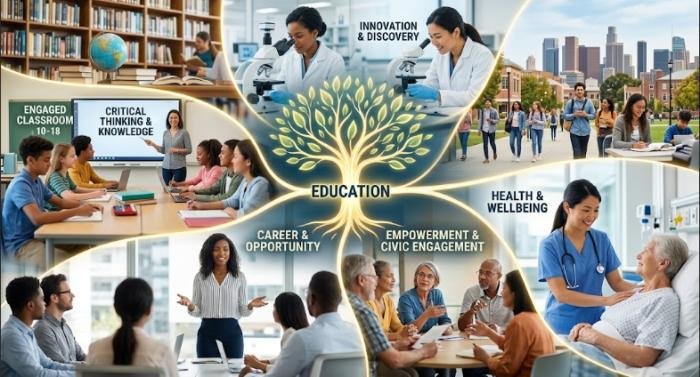
Why is education important has always been one of the strongest foundations for building a successful life. It shapes how people think, communicate, solve problems, and contribute to society. In today’s rapidly changing world, education is no longer limited to classrooms or university degrees. It has become a lifelong process that helps people adapt to new technologies, changing job markets, and evolving social needs.
For students, education builds a strong foundation for future careers. For working professionals, it creates opportunities for advancement and skill development. For parents, it helps them guide their children toward success. For career changers, it provides the confidence and qualifications needed to enter new industries.
In the United States, employers increasingly value both academic knowledge and practical skills. As industries continue to evolve, continuous learning has become necessary for long-term career success.
Explain the personal and professional benefits of education and why investing in learning can create lasting opportunities throughout life.
Read More: Thesindi com Features, Content, Pros, Cons & User ExperienceIntroduction
What Is Education and Why Does It Matter?
Education is the process of acquiring knowledge, skills, values, and habits through various forms of learning. It can happen inside schools, colleges, workplaces, online platforms, or through life experiences. There are three primary types of education:
Formal Education
Formal education takes place in structured institutions such as schools, colleges, and universities. It follows a curriculum and leads to certifications or degrees.
Informal Education
Informal education occurs naturally through daily experiences, conversations, reading books, and personal observations.
Non-Formal Education
Non-formal education includes workshops, online courses, vocational training, and certification programs that focus on specific skills. Education matters because it prepares individuals to handle personal and professional responsibilities effectively. It equips people with tools that help them adapt to a constantly changing world.
Many people wonder why is education important beyond obtaining a degree. Education develops critical thinking abilities, strengthens communication skills, and helps people become responsible members of society.
Why Is Education Important for Personal Growth?
Personal growth refers to improving oneself mentally, emotionally, socially, and intellectually. Education plays a major role in this process.
Builds Self-Confidence
Education helps people believe in their abilities. When individuals gain knowledge and master new skills, they become more confident in handling challenges. Confidence allows people to:
- Express their opinions clearly
- Participate in discussions
- Take on leadership roles
- Make informed decisions
Develops Critical Thinking Skills
Critical thinking is one of the most valuable life skills. Education teaches individuals how to:
- Analyze information
- Evaluate evidence
- Identify reliable sources
- Solve complex problems
Instead of accepting information at face value, educated individuals learn to ask questions and think independently. This is another reason why is education important in the digital age, where misinformation can spread quickly.
Improves Communication Skills
Strong communication skills are necessary in both personal and professional settings. Education helps people improve:
- Reading abilities
- Writing skills
- Public speaking
- Active listening
Promotes Emotional Intelligence
Emotional intelligence involves understanding and managing emotions effectively. Education encourages:
- Empathy
- Self-awareness
- Conflict resolution
- Relationship building
Encourages Lifelong Learning
Learning should not stop after graduation. Continuous learning helps individuals:
- Stay informed
- Develop new skills
- Adapt to change
- Remain competitive
Why Is Education Important for Career Growth?
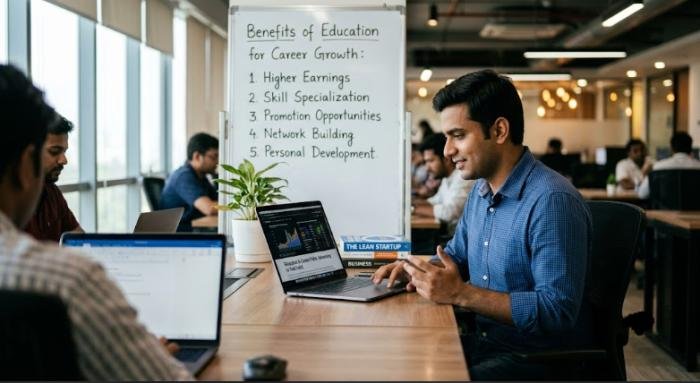
Career growth depends heavily on knowledge, skills, and the ability to adapt to workplace changes. Many employers seek candidates who demonstrate both technical expertise and strong interpersonal skills.
Creates More Job Opportunities
Education opens doors to a wider range of careers.Employers often use educational qualifications as one of their hiring criteria. Education can help individuals qualify for positions in:
- Healthcare
- Technology
- Finance
- Engineering
- Education
- Business management
Increases Earning Potential
Research consistently shows that higher levels of education are associated with higher income levels. Individuals who continue developing their skills often gain access to:
- Better salaries
- Improved benefits
- Greater job security
- Leadership positions
Builds Professional Skills Employers Value
Modern employers value practical workplace skills. Education helps develop:
- Leadership
- Teamwork
- Problem-solving
- Time management
- Digital literacy
- Adaptability
Supports Career Advancement
Career advancement requires ongoing development. Employees who invest in learning often have better chances of:
- Receiving promotions
- Managing teams
- Leading projects
- Expanding responsibilities
Helps Career Changers Enter New Industries
Career transitions have become increasingly common. Education allows individuals to:
- Learn industry-specific skills
- Gain certifications
- Build confidence
- Expand professional networks
10 Major Benefits of Education
Education positively impacts nearly every area of life. Here are ten major benefits:
Expands Knowledge and Awareness: Education helps individuals understand the world better and make informed decisions in daily life.
Improves Communication Skills: It strengthens reading, writing, speaking, and listening abilities, making communication more effective.
Creates Better Job Opportunities: Education opens doors to a wider range of careers and increases employability.
Increases Earning Potential: Individuals with higher levels of education often qualify for better-paying positions.
Builds Self-Confidence: Learning new skills and gaining knowledge helps people feel more capable and confident.
Strengthens Critical Thinking: Education teaches individuals how to analyze information, evaluate evidence, and solve problems effectively.
Encourages Innovation and Creativity – It inspires people to think creatively, develop new ideas, and find innovative solutions.
Promotes Healthier Decision-Making: Educated individuals are often better equipped to make informed choices about health, finances, and lifestyle.
Supports Adaptability: Continuous learning helps people adjust to new technologies, workplace changes, and evolving challenges.
Creates Long-Term Personal and Professional Success: Education provides the knowledge, skills, and mindset needed for lifelong growth and achievement.
How Education Supports Personal and Career Growth
| Area | Personal Benefits | Career Benefits |
| Knowledge | Better decision-making | Industry expertise |
| Communication | Stronger relationships | Workplace collaboration |
| Critical Thinking | Problem-solving abilities | Strategic decision-making |
| Confidence | Greater independence | Leadership opportunities |
| Digital Skills | Technology awareness | Job market competitiveness |
| Lifelong Learning | Continuous improvement | Career advancement |
| Emotional Intelligence | Better relationships | Team management |
| Adaptability | Easier life transitions | Professional resilience |
Why Education Matters in Today’s Digital World
Technology has transformed how people live and work. Artificial intelligence (AI), automation, and digital tools are changing industries at an unprecedented pace. Many jobs today require technical skills that were not necessary just a decade ago. This shift further explains why education is important for future generations.
According to the World Economic Forum, technological advancements are expected to reshape millions of jobs worldwide, making continuous learning and skill development more important than ever. Similarly, research from UNESCO highlights that digital literacy has become a critical skill for participating effectively in modern society. Education helps individuals stay prepared by teaching them how to:
Use Technology Responsibly – Learn how to use digital tools safely, protect personal data, and understand ethical technology practices. For example, students learn online safety and cybersecurity basics.
Evaluate Online Information – Identify trustworthy sources and avoid misinformation. This skill is essential when reading news, conducting research, or making important decisions online.
Develop Digital Skills – Gain practical skills such as computer literacy, data analysis, coding, and online collaboration. For example, knowledge of software like spreadsheets, project management tools, or AI applications can improve employability.
Adapt to Workplace Changes – Stay competitive as industries adopt automation and new technologies. Professionals who continuously update their skills are often better positioned for promotions and career growth.
Employers increasingly seek candidates who can combine technical expertise with strong communication, critical thinking, and problem-solving abilities. For example, a digital marketer may need both analytical skills and creativity, while a healthcare professional may need to use advanced digital systems alongside patient communication skills.
The ability to learn continuously has become one of the most valuable professional assets. In today’s digital economy, education is no longer just an advantage—it is a necessity for staying relevant, employable, and prepared for future opportunities.
Education and Workforce Readiness in the United States
The American workforce continues to evolve as industries increasingly prioritize skills-based hiring alongside traditional degrees. Employers are looking for candidates who can demonstrate practical skills, adaptability, and a commitment to continuous learning.
According to the U.S. Bureau of Labor Statistics, workers with higher levels of education generally experience lower unemployment rates and higher median earnings compared to those with less education. This trend highlights the strong connection between education and long-term career success. Workers who invest in education often gain advantages such as:
Greater Employment Opportunities – Higher education, certifications, and specialized training can qualify individuals for a broader range of careers. For example, fields such as healthcare, engineering, and information technology often require specific educational credentials.
Increased Adaptability – Continuous learning helps workers keep pace with changing technologies and industry demands. For instance, many professionals now take courses in artificial intelligence, cloud computing, or data analytics to remain competitive.
Better Professional Networks – Colleges, universities, and professional training programs provide opportunities to connect with instructors, mentors, and industry professionals. These relationships can lead to internships, job referrals, and career growth.
Stronger Leadership Potential – Education develops communication, problem-solving, and decision-making skills that are essential for leadership roles. Many managers and executives strengthen these abilities through advanced degrees or leadership training programs.
Education also supports entrepreneurship. Individuals who understand finance, marketing, communication, and business strategy are often better prepared to launch and grow successful businesses. For example, many U.S. entrepreneurs use knowledge gained through business courses, startup incubators, and professional development programs to turn ideas into profitable companies.
As automation, artificial intelligence, and digital transformation continue reshaping the workplace, employers increasingly value workers who can learn new skills and adapt quickly. This growing demand for adaptable professionals further explains why education is important for long-term success in the United States
How Education Benefits Different Groups of People
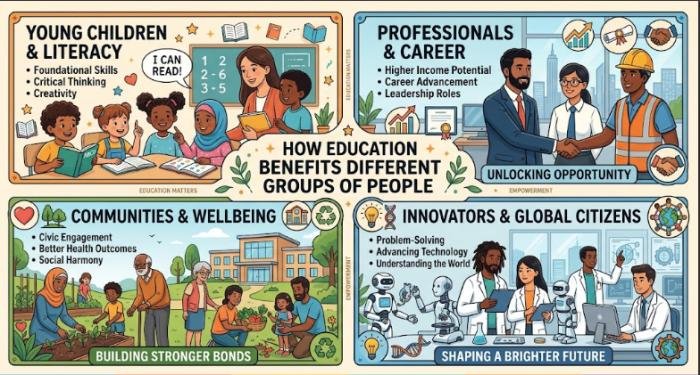
Education does not benefit only one type of person. It provides value to people at every stage of life and in every profession. Whether someone is entering school, changing careers, or preparing for retirement, learning continues to play an important role.
Students
Students build the foundation for their future through education. Education helps students:
- Develop study habits
- Improve discipline
- Build confidence
- Prepare for future careers
- Learn teamwork and communication skills
Job Seekers
Job seekers use education to strengthen their qualifications.Additional certifications, online courses, and skill development programs can improve employability and help candidates stand out in competitive markets.Many recruiters prioritize candidates who demonstrate a commitment to learning and professional growth.
Fresh Graduates
Fresh graduates benefit from education by becoming workplace ready. Education teaches them how to:
- Communicate professionally
- Collaborate with teams
- Solve workplace problems
- Manage projects effectively
Working Professionals
Professional growth does not stop after getting a job. Many professionals continue learning through:
- Industry certifications
- Leadership programs
- Workshops
- Online courses
Parents
Parents also benefit greatly from education. It helps them:
- Support their children’s learning
- Make informed financial decisions
- Improve family communication
- Encourage healthy habits
Lifelong Learners
Many people pursue education simply because they enjoy learning.Lifelong learners remain curious and open to new ideas throughout their lives. This habit helps people stay mentally active and adaptable.
Why Is Education Important in Building a Stronger Society?
Education benefits entire communities, not just individuals.When people are educated, societies become more productive, innovative, and resilient. Education contributes to society by:
- Reducing poverty
- Supporting economic growth
- Encouraging civic participation
- Promoting equality
- Strengthening communities
This broader impact is another reason why is education important for future generations. Educated communities often experience lower unemployment rates and greater opportunities for innovation. People who understand social issues can also participate more effectively in community development and public discussions.
Challenges That Can Limit Access to Education
Despite its importance, access to education is not always equal. Many people face obstacles that make learning difficult.
Financial Barriers
Education can be expensive. Some common costs include:
- Tuition fees
- Textbooks
- Technology expenses
- Transportation costs
Time Constraints
Many adults balance multiple responsibilities.Common challenges include:
- Full-time jobs
- Parenting responsibilities
- Household duties
The Digital Divide
Technology has increased access to learning, but not everyone has equal access. Some people face challenges such as:
- Limited internet access
- Outdated devices
- Lack of technical skills
Skill Gaps
Certain learners may require additional support to keep up with changing demands.Industries continue evolving rapidly, making continuous learning necessary.
Practical Ways to Continue Learning Throughout Life
Lifelong learning has become essential. Fortunately, there are many simple ways to continue developing knowledge and skills.
Set Clear Learning Goals
Creating goals provides direction. Examples include:
Short-term goals:
- Complete an online course
- Read one book each month
- Improve writing skills
Long-term goals:
- Earn a professional certification
- Learn a new language
- Develop leadership skills
Take Advantage of Online Learning Platforms
Online education has made learning more accessible. People can learn at their own pace through:
- Video lessons
- Virtual classrooms
- Interactive assignments
Read Regularly
Reading remains one of the easiest ways to expand knowledge. Useful resources include:
- Books
- Industry magazines
- Research publications
- Professional blogs
Develop In-Demand Skills
Employers increasingly value practical skills. Some high-demand skills include:
- Digital literacy
- Data analysis
- Communication
- Leadership
- Problem-solving
- Project management
Build a Daily Learning Habit
Consistency matters more than intensity. Even 20 to 30 minutes of learning each day can create significant improvements over time. Small habits often lead to long-term success.
Common Myths About Education
Many misconceptions discourage people from continuing their education. Let’s address some of the most common myths and uncover the reality behind them.
1: Education Ends After Graduation
Reality: Learning is a lifelong process. Industries constantly evolve, and new skills are regularly required. According to the World Economic Forum, many workers will need additional training and upskilling as technology continues to reshape jobs. Professionals who continue learning through certifications, workshops, and online courses are often better prepared for future opportunities.
Example: A software developer may need to learn artificial intelligence or cloud computing skills years after earning a university degree.
2: Only College Degrees Matter
Reality: While college degrees remain valuable, employers increasingly recognize certifications, vocational training, and practical experience. Skills-based hiring has become more common across many industries.
Example: Certifications such as CompTIA Security+, Google Data Analytics, AWS Certified Cloud Practitioner, and Project Management Professional (PMP) can help candidates qualify for competitive positions even without advanced degrees.
3: Adults Are Too Old to Learn
Reality: Learning can happen at any age. Research shows that adults can continue developing new skills throughout their lives. Many successful professionals change careers in their 30s, 40s, 50s, and beyond.
Example: A teacher may transition into instructional design, or a sales professional may move into digital marketing after completing relevant training programs.
4: Education Guarantees Success
Reality: Education creates opportunities and provides valuable skills, but success also depends on factors such as dedication, adaptability, persistence, communication, and work ethic. Education is a powerful tool, but it works best when combined with consistent effort.
Example: Two individuals may have the same degree, but the person who continuously improves their skills and gains practical experience is often more likely to advance professionally.
5: Everything Can Be Learned from the Internet Alone
Reality: The internet provides access to information, but education teaches people how to evaluate sources, think critically, solve problems, and apply knowledge effectively. Structured learning often helps individuals develop a deeper understanding of complex subjects.
Example: Reading medical information online is different from receiving formal medical education that includes supervised training and practical experience.
6: Education Is Only for Career Growth
Reality: Education supports much more than employment. It improves decision-making, financial literacy, communication skills, emotional intelligence, and personal development. Educated individuals are often better equipped to navigate everyday challenges.
Example: Learning personal finance can help individuals manage budgets, reduce debt, and make informed investment decisions.
7: Good Grades Always Equal Intelligence
Reality: Academic performance is only one measure of achievement. Intelligence can also include creativity, emotional intelligence, leadership, problem-solving ability, and practical skills.
Example: Many successful entrepreneurs and innovators achieved success because of creativity, persistence, and business skills rather than perfect academic records.
8: Education Is Too Expensive to Be Worth It
Reality: Although education can require an investment of time and money, many forms of learning are now affordable and accessible through community colleges, vocational programs, scholarships, and online learning platforms.
Example: A professional who earns a specialized certification may recover the cost through improved job opportunities and higher earnings.
These realities demonstrate why education remains important throughout every stage of life. Whether someone is a student, working professional, entrepreneur, or retiree, continuous learning helps people adapt, grow, and succeed in an ever-changing world.
Conclusion
Education remains one of the most valuable investments a person can make throughout life. It goes beyond earning degrees or securing employment by helping individuals develop critical thinking, communication, problem-solving, and adaptability skills. From personal growth and career advancement to financial stability and lifelong learning, education creates opportunities that support long-term success. In today’s rapidly evolving digital world, continuous learning is more important than ever. Whether you are a student, job seeker, working professional, parent, or entrepreneur, investing in education can help you stay competitive, achieve your goals, and contribute positively to society and future generations.
FAQs
Q1: Why is education important in everyday life?
Ans: Education helps people make informed decisions, communicate effectively, solve problems, and manage personal and professional responsibilities.
Q2: Why is education important for career success?
Ans: Education develops the knowledge and skills employers value, increasing job opportunities, earning potential, and career advancement.
Q3: Can education improve financial stability?
Ans: Yes. Education often increases earning potential and provides access to better employment opportunities.
Q4: Is education important after graduation?
Ans: Yes. Continuous learning helps individuals stay competitive and adapt to changing industries.
Q5: How does education benefit society?
Ans: Education promotes economic growth, innovation, equality, and stronger communities.
Q6: What skills does education help develop?
Ans: Education strengthens communication, critical thinking, leadership, teamwork, emotional intelligence, and problem-solving skills.
Q7: Why is lifelong learning important?
Ans: Lifelong learning helps individuals remain adaptable, improve their skills, and stay prepared for future opportunities.