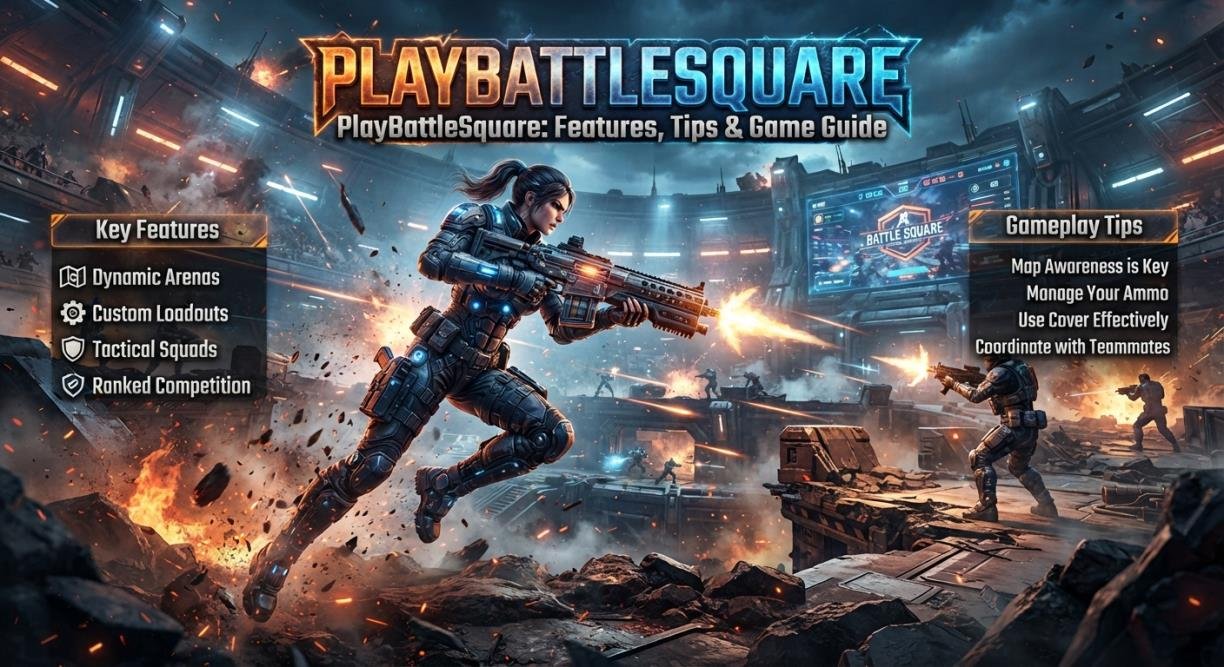
In Video Games PlayBattleSquare: Features, Tips & Game Guide
Video games are most enjoyable when players understand the objective, controls, and decisions that shape each session. In video games playbattlesquare may reflect interest in BattleSquare-related gaming content, gameplay information, features, or practical playing advice.
Because online descriptions can vary, players should verify specific game modes, rules, and features with the current official source before relying on them. It covers the basics, explains important gameplay principles, provides beginner and advanced tips, and shows how players can turn mistakes into measurable improvement.
What Is PlayBattleSquare in Video Games?
In video games playbattlesquare can be treated as an informational search connected with PlayBattleSquare and BattleSquare-related gaming experiences. Depending on the source a player visits, the term may refer to a particular gaming experience or broader gaming content.
Before getting started, confirm the exact game, mode, platform, or website you intend to use. This is important because controls, objectives, scoring, progression, and available features can differ between games.
Read more: Special Settings Tportstick Complete Setup & Configuration Guide
Why Context Matters
A useful game guide should match the experience a player is actually using. Advice about one game mode may not apply to another. Players should therefore check the current rules and instructions before applying advanced strategies.
In video games playbattlesquare, the first practical step is identifying the specific BattleSquare experience. Once that is clear, learning the controls and objectives becomes much easier.
Main Features Players Should Consider
When evaluating in video games playbattlesquare, focus on features that directly influence the player experience rather than relying on broad promotional language.
Gameplay and Objectives
A good game gives players a clear reason to act and a consequence for their decisions. Depending on the particular experience, this may involve combat, area control, timed objectives, resource management, challenges, or strategic choices.
The important question is not simply, “What can I do?” Instead, ask, “Which action helps me achieve the objective?”
Controls and Responsiveness
Learning the basic controls should be a priority. Movement and common actions should become comfortable before a player attempts complicated strategies.
If the experience depends on a browser or online connection, technical performance can also affect gameplay. Input delay, unstable connectivity, or device limitations may make otherwise simple actions feel inconsistent.
Progression and Rewards
If a game includes progression, players should understand what different rewards provide. Some may be cosmetic, while others can influence available options or progression.
Understanding the purpose of a reward system helps players make better decisions about how they spend time or in-game resources.
How Beginners Should Get Started
In video games playbattlesquare, the first few sessions should be treated as practice rather than a test of skill.
1. Understand the Objective: Start by identifying how progress or victory is achieved. If points are important, determine how they are earned. If objectives or zones matter, learn when they become valuable.
2. Learn the Basic Controls: Practice movement and core actions until they become comfortable. Beginners often struggle because they are thinking about controls at the same time they are trying to make strategic decisions.
3. Learn the Environment: If the game includes maps or distinct areas, gradually identify useful positions, routes, objectives, cover, and possible escape paths. Trying to memorize everything immediately can be overwhelming. Learning one section at a time is more effective.
4. Set One Practice Goal: Instead of focusing entirely on winning, choose one measurable improvement goal.
For example: play several matches while concentrating specifically on better positioning. This makes progress easier to identify.
Practical Gameplay Tips
The most useful advice for in video games playbattlesquare should be simple enough to apply during an actual session.
Prioritize Positioning
Good positioning gives a player more options. A strong position may provide cover, information, access to an objective, or an escape route.
Before moving, ask whether the new position genuinely improves the situation or simply puts you closer to the action.
Build Situational Awareness
Do not focus only on the opponent directly in front of you. Pay attention to objectives, teammates, routes, resources, and changes in the overall game state.
A useful awareness cycle is: Observe → Interpret → Decide → Act → Reassess
Improve Your Timing
Even a good decision can fail when the timing is poor. Before committing to an attack, rotation, defensive move, or objective, consider whether the current moment provides an advantage.
Avoid Unnecessary Fights
Not every encounter needs to be taken. If an engagement provides little benefit but carries significant risk, avoiding it may be the stronger decision.
Practice One Skill at a Time
Trying to improve movement, awareness, timing, positioning, and strategy simultaneously makes progress difficult to measure. Choose one weakness, practice it consistently, and then move to the next.
Intermediate Strategy: Think Beyond Basic Controls
Once the fundamentals become comfortable, in video games playbattlesquare becomes less about knowing what buttons to press and more about deciding why and when to act.
Think About Value
Every action has a possible benefit and a possible cost. Chasing an opponent may create a short-term advantage but could pull a player away from an important objective.
A simple mental model is: Value = Expected Benefit − Expected Cost
Exact numbers are unnecessary. The formula simply encourages more deliberate decisions.
Use the PACE Decision Framework
The PACE framework can help players make decisions when a situation becomes complicated.
| PACE Step | Question | Practical Example |
| P — Purpose | What am I trying to accomplish? | Secure an important objective |
| A — Awareness | What do I know right now? | Check opponents, teammates, and routes |
| C — Cost | What happens if I fail? | Lose time, position, or resources |
| E — Exit | What is my fallback? | Keep another route available |
Adapt Instead of Repeating
If a strategy fails repeatedly, change one variable. Try a different route, position, timing, or target priority. Do not completely rebuild your strategy after one loss. A single result may be affected by execution, circumstances, technical conditions, or normal variation.
Advanced Tips for More Consistent Play
Players looking to get more from in video games playbattlesquare should eventually study patterns rather than isolated moments.
Read the Flow of Play
Look for repeated routes, predictable behavior, resource timing, and situations where opponents become overcommitted. The objective is not to predict everything. It is to reduce uncertainty and make better decisions with the information available.
Preserve Your Options
A strong position often provides several possible responses. A risky position may offer immediate pressure but leave no safe way to react if circumstances change. When two choices offer similar benefits, consider the option that preserves more future possibilities.
Separate Mechanics From Decision-Making
Review mechanical execution separately from strategic judgment.
Mechanical questions:
- Did I execute the action correctly?
- Was my movement controlled?
- Was the input properly timed?
Decision questions:
- Was the action necessary?
- Did I understand the risk?
- Was there a better option?
- Did the decision support the objective?
This separation helps players identify what actually needs practice.
How to Improve Through Post-Game Review
In video games playbattlesquare, reviewing gameplay can be more valuable than simply playing more matches without a clear purpose.
Use Three Simple Questions
After each session, ask:
- What worked?
- What went wrong repeatedly?
- What single change should I test next?
Keep the review short. The goal is to create a practical feedback loop.
Track Recurring Errors
Write down repeated problems such as poor positioning, rushed decisions, missed objectives, or bad timing. If the same issue appears across several sessions, it deserves focused practice.
Change One Variable at a Time
If you change your controls, route, equipment, and strategy simultaneously, it becomes difficult to determine what actually caused the result. Small experiments provide clearer feedback.
Technical Tips for Better Gameplay
In video games playbattlesquare, especially when responsive controls or an online connection are important.
Check Connection Stability
If you experience delays or interruptions, determine whether the issue happens consistently. A stable connection makes it easier to distinguish technical problems from gameplay mistakes.
Keep Your Device Responsive
Close unnecessary applications when appropriate and make sure the device can handle the game comfortably. Background activity or hardware limitations may affect responsiveness.
Choose Comfortable Settings
There is no universal perfect sensitivity, display setting, or interface arrangement. Use settings that make controls predictable and information easy to read.
A Practical Gameplay Example
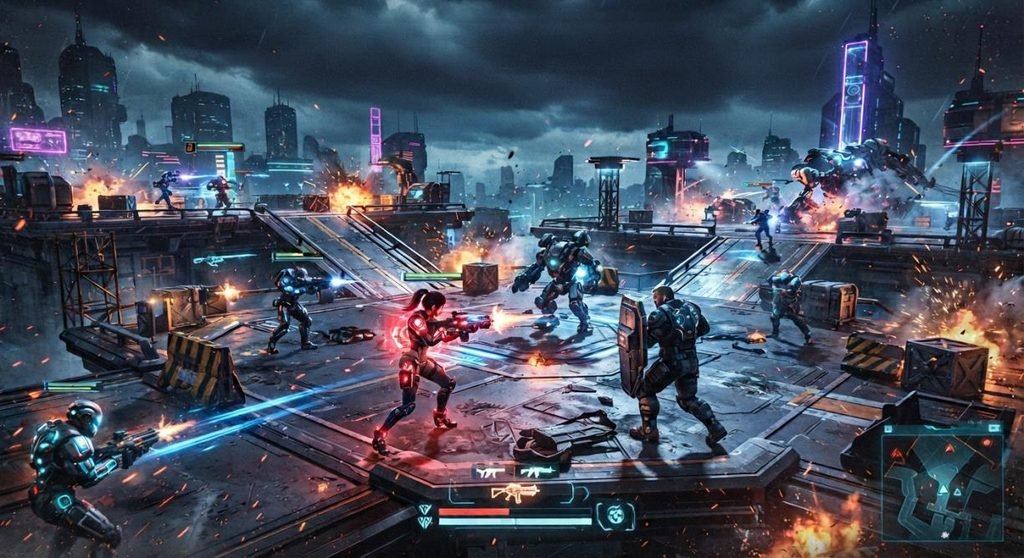
Imagine a player approaching an important objective while an opponent may be nearby. A beginner might immediately rush because the objective looks valuable. A more deliberate player can use the PACE framework:
Purpose: Secure the objective.
Awareness: Check likely enemy positions and available routes.
Cost: Consider losing health, time, or control of the area.
Exit: Keep a fallback route available.
The player can then decide whether to commit immediately, reposition, gather more information, or wait for a better opportunity.
What Makes a Useful Gaming Guide?
A high-quality resource about in video games playbattlesquare should provide more than generic statements such as “practice more” or “play aggressively.” Useful content should:
- Separate verified information from general advice.
- Explain why a recommendation works.
- Provide practical examples.
- Cover beginner and advanced needs.
- Address technical considerations.
- Avoid unsupported promises.
- Encourage independent decision-making.
- Remain accurate when game features change.
FAQs about in video games playbattlesquare
Q1: What is in video games playbattlesquare?
Ans: The phrase is an informational search associated with PlayBattleSquare and BattleSquare-related gaming content. Because different sources may describe different experiences, players should confirm the exact game, mode, or platform before relying on specific features or rules.
Q2: How should beginners start playing in video games playbattlesquare?
Ans: Begin with the objective, controls, and basic environment. Practice movement and core actions before attempting advanced strategies. Choose one improvement goal for each session and review the result afterward.
Q3: How can I improve my gameplay?
Ans: Focus on one skill at a time, such as positioning, awareness, timing, or risk management. Review recurring mistakes after several sessions and make one deliberate adjustment instead of changing everything at once.
Q4: Should beginners play aggressively?
Ans: Not automatically. Aggression is useful when it supports an objective or creates meaningful value. Unnecessary fights can cost time, position, health, or resources, so beginners should also learn when patience is more appropriate.
Q5: What is the PACE decision framework?
Ans: PACE stands for Purpose, Awareness, Cost, and Exit. It helps players identify what they want to accomplish, assess the situation, consider the consequences of failure, and maintain a fallback option.
Q6: Should I copy strategies from advanced players?
Ans: Study advanced players for principles rather than copying every action. Pay attention to their positioning, timing, information gathering, and risk management, then adapt those ideas to your own experience level.
Conclusion
The best gaming improvement rarely comes from one secret tactic. It comes from understanding objectives, making informed decisions, practicing deliberately, and learning from repeated patterns.
In video games playbattlesquare, the strongest approach is to begin with reliable information about the specific BattleSquare experience and then build skills gradually. Learn the fundamentals, improve positioning and awareness, manage risk, check technical performance, and use post-game reviews to turn mistakes into specific practice goals.
Most importantly, make each session purposeful. One better decision may seem small, but repeated improvements can gradually lead to stronger, more confident, and more consistent gameplay.