
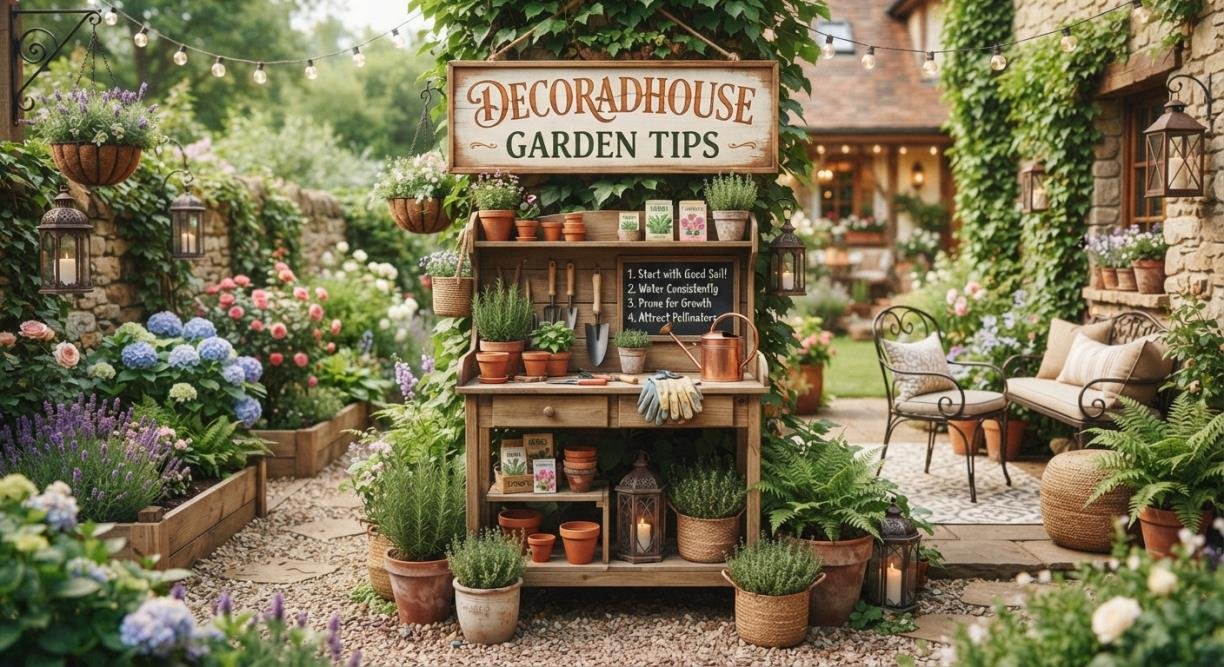
Garden Tips Decoradhouse : Practical Ideas for a Beautiful Outdoor Space
A beautiful garden does not have to be expensive, complicated, or professionally designed. With the right plants, thoughtful organization, and a few attractive decorative touches, an ordinary outdoor area can become a comfortable extension of your home.
Many homeowners, however, make the same mistake: they buy plants and decorations before deciding how the space should work. The result can be a crowded garden, difficult maintenance, poor plant growth, or décor that does not match the surroundings.
Garden tips decoradhouse can provide a practical starting point. Instead of focusing only on appearance, a good garden combines beauty, usability, plant health, and easy maintenance. Whether you have a spacious backyard, a small patio, a balcony, or a narrow outdoor area, the following ideas can help you create a garden that looks attractive and remains enjoyable throughout the year.
Plan Your Garden Before You Start
Good garden design starts with planning. Before purchasing anything, spend some time observing your outdoor space. Notice how much sunlight different areas receive, where rainwater collects, which parts remain shaded, and where you naturally spend the most time.
Garden tips decoradhouse approach begins with this simple principle: design around the space you already have instead of forcing the space to follow a particular trend.
Read more: Zingyzon Com in USA Review Features, Benefits Drawbacks & Safety
Study Sunlight and Available Space
Sunlight affects almost every gardening decision. Some flowering plants and vegetables require several hours of direct sunlight, while others perform better in partial shade. Measure your available area and make a simple sketch. Mark existing trees, walls, doors, pathways, and other permanent features.
This small amount of planning can prevent you from purchasing plants that eventually become too large or placing furniture where it blocks movement.
Decide How You Will Use the Garden
Think about the purpose of your garden. Do you want a peaceful reading corner, a place for family gatherings, a children’s play area, or primarily a decorative landscape?
A garden designed around its purpose usually feels more organized. Leave enough open space for movement and place seating where people can comfortably enjoy the plants and surroundings.
Prepare Healthy Soil for Better Plants
Healthy soil provides the foundation for successful gardening. Even the most attractive plants can struggle if the soil is compacted, poorly drained, or unsuitable for their needs. Before planting, examine the soil texture and drainage. If water remains on the surface for a long time, drainage may need attention.
Improve Soil Quality
Adding suitable organic matter can improve soil structure and provide a better growing environment for many plants. Compost is commonly used to increase organic content, although the appropriate amendment depends on your soil and plants.
Avoid adding products simply because they are popular. First determine what your garden actually needs. Soil testing can be useful when you are planning a larger planting project or growing plants with specific nutritional requirements.
Pay Attention to Drainage
Poor drainage can cause root problems, particularly for plants that prefer drier conditions. Choose plants according to the natural conditions of your garden. If a particular area stays wet, consider moisture-tolerant plants instead of repeatedly trying to grow plants that prefer dry soil. Garden tips decoradhouse because healthy plants make the entire garden easier to maintain.
Choose Plants According to Your Space
Plants should be selected for more than their appearance. Consider their mature size, sunlight requirements, watering needs, growth rate, and seasonal characteristics. A balanced garden often combines plants with different heights and textures.
Mix Heights, Colors, and Textures
Tall plants can create structure at the back of a border, medium-sized plants can fill the middle, and low-growing plants can soften edges. You can also combine different leaf shapes and textures. Foliage plants can provide visual interest even when flowers are not blooming. Rather than using too many colors, choose a simple palette that works with your home and outdoor furniture.
Select Low-Maintenance Plants
If you have limited time for gardening, choose plants that are well suited to your climate and available growing conditions. Native or well-adapted plants may require less attention when established in suitable conditions. However, maintenance needs still vary by species and location. Research the mature size of every plant before purchasing it. A plant that looks small in a nursery container may eventually need considerably more space.
Add Containers for Flexible Garden Design
Garden tips decoradhouse is one of the easiest ways to add plants and color without changing the entire landscape. It is particularly useful for balconies, patios, entrances, small yards, and rental properties where permanent landscaping may not be practical.
Choose Suitable Containers
Choose containers according to the plant’s root requirements. Make sure they have suitable drainage holes so excess water can escape. The material also matters. Terracotta, ceramic, metal, plastic, and composite containers each have different durability and moisture characteristics. Large containers can become heavy, so think about their final location before filling them with soil.
Arrange Pots Creatively
Instead of placing containers randomly, create groups using different heights. You can place taller plants behind shorter ones and repeat similar colors to create visual consistency. Garden tips decoradhouse concept works particularly well here because small decorative changes can have a noticeable impact without requiring major landscaping work.
Use Garden Décor With Purpose
Garden décor should complement plants rather than overwhelm them. Too many ornaments can make even a large garden feel crowded. Choose decorative pieces that either provide a useful function or create a clear visual focal point.
Choose Functional Decorative Pieces
Benches, trellises, planters, stepping stones, outdoor screens, and suitable lighting can combine beauty with practical value. A trellis, for example, can support climbing plants while adding vertical interest. A bench can provide seating while becoming a natural focal point. Durability should also be considered. Outdoor products are exposed to rain, sunlight, wind, and temperature changes.
Keep the Design Balanced
Repeat materials, shapes, or colors instead of mixing too many unrelated styles. For example, if your garden contains natural wood furniture, you might repeat wood tones in planters or other decorative elements. A simple color scheme often looks more polished than a collection of unrelated bright colors.
Make Small garden tips decoradhouse Feel Bigger
A small garden can be beautiful when every part of the space has a purpose. The goal is not to fill every empty area but to create visual interest while maintaining a feeling of openness.
Use Vertical Space
Walls, fences, trellises, and railings can provide valuable growing space. Climbing plants can bring greenery upward, while hanging baskets and wall-mounted planters can add color without taking much floor space. Before installing heavy planters, make sure the supporting structure can safely handle the weight.
Create Visual Depth
Layering is useful in compact gardens. Place taller plants farther back and shorter plants toward the front. A pathway can also guide the eye through the garden. Curved or partially hidden pathways may create a stronger sense of depth where the layout allows. Mirrors can sometimes create an illusion of additional space, but they should be installed carefully to avoid glare or other safety concerns.
Improve the Garden With Outdoor Lighting
Good lighting allows you to enjoy your garden after sunset while improving visibility around important areas. The purpose is not to make the entire garden extremely bright. A few carefully positioned lights can often create a more pleasant atmosphere.
Light Paths and Seating Areas
Path lighting can improve visibility around walkways and steps. Lighting near seating areas can make evening conversations and outdoor dining more comfortable. Choose fixtures designed for outdoor conditions and follow appropriate electrical safety requirements.
Highlight Focal Features
Use lighting to draw attention to attractive trees, architectural elements, water features, planters, or garden artwork. Warm, subtle illumination can create a relaxed atmosphere while allowing the natural beauty of plants to remain the focus.
Garden tips decoradhouse, lighting is an easy way to change the character of an outdoor space without replacing the existing landscape.
Create a Comfortable Outdoor Living Space
A garden tips decoradhouse becomes more useful when it provides a comfortable place to sit, relax, eat, or spend time with family. You do not need a large outdoor room. Even a small seating area can make an unused corner more valuable.
Add Practical Garden Furniture
Choose furniture according to the available space. A compact bench or two chairs may be more suitable than a large sofa in a small garden. Consider weather resistance, cleaning requirements, and storage when selecting outdoor furniture. Position seating where it provides a pleasant view of plants or other garden features.
Create a Relaxing Corner
Add a small table, comfortable cushions, potted plants, or an outdoor rug where appropriate. Keep accessories limited so the area remains easy to use and maintain. A simple relaxation corner can become one of the most enjoyable parts of your outdoor space.
Make Garden Maintenance Easier
A beautiful garden should not become a constant source of work. Smart planning can reduce unnecessary maintenance. Garden tips decoradhouse principle is to choose plants and materials based on how much time you realistically have available.
Water Plants Properly
Watering requirements vary by plant, soil, season, weather, and rainfall. Instead of automatically watering every day, check the soil and understand the requirements of individual plants. Efficient watering methods can help reduce waste. Watering deeply when appropriate is often more useful than frequent, shallow watering, but exact practices depend on the plant and growing conditions.
Use Mulch and Maintain Regularly
Suitable mulch can help conserve soil moisture, reduce some weed growth, and protect the soil surface. Keep mulch away from direct contact with plant stems and tree trunks. Create a simple weekly routine. Remove dead growth, inspect plants for pests or disease, clear pathways, check containers, and remove weeds while they are still small.
| Garden Area | Practical Tip | Main Benefit |
| Soil | Add suitable organic matter | Supports healthier plant growth |
| Plants | Select suitable varieties | Reduces maintenance problems |
| Water | Check soil moisture | Helps prevent overwatering |
| Containers | Provide proper drainage | Supports healthier roots |
| Décor | Choose durable materials | Improves long-term value |
| Paths | Keep them clean | Improves safety and appearance |
| Lighting | Use outdoor-rated fixtures | Improves evening usability |
Try Sustainable garden tips decoradhouse Ideas
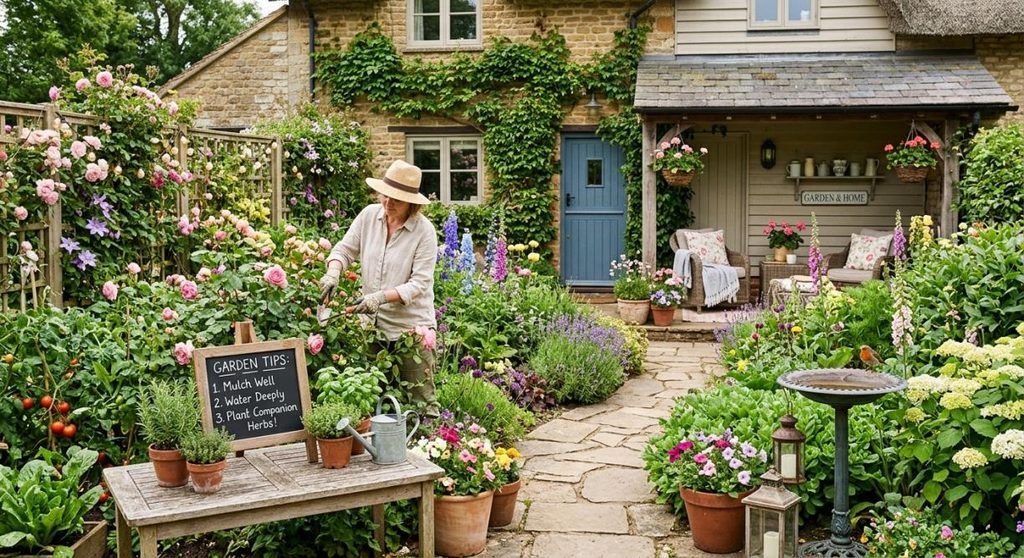
Sustainable gardening does not require a complicated setup. Small changes can reduce waste and create a healthier outdoor environment. Composting suitable organic waste, reusing appropriate containers, conserving water, and selecting durable materials are practical places to start.
Save Water and Reduce Waste
Collecting rainwater may be useful where local regulations and conditions permit. Efficient irrigation can also reduce unnecessary water consumption. Reuse materials when they are safe and suitable for outdoor use. An old container, wooden box, or unused item may sometimes become a useful planter or garden feature. Avoid purchasing disposable decorations that quickly deteriorate outdoors.
Support Birds and Beneficial Insects
A garden can provide food and shelter for birds, butterflies, bees, and other beneficial wildlife. Planting a variety of flowering plants can provide resources across different periods of the growing season. Avoid unnecessary pesticide use and choose gardening practices that minimize harm to beneficial organisms.
Final Thoughts
A garden can quickly become messy, expensive, and difficult to maintain when plants, furniture, and décor are added without a clear plan. The solution is to focus on simple choices that work together—healthy soil, suitable plants, smart layouts, practical décor, efficient watering, and thoughtful lighting.
Garden tips decoradhouse ideas help transform an ordinary outdoor area into a beautiful, comfortable, and manageable space without unnecessary complexity. The purpose is not to create a perfect garden overnight, but to help you make confident improvements that suit your space, lifestyle, and budget. Start small, stay consistent, and let your garden grow beautifully over time.
FAQs about garden tips decoradhouse
Q1: What are the best garden tips decoradhouse?
Ans: Start with suitable plants, healthy soil, proper sunlight, simple layouts, regular watering, and manageable garden décor.
Q2: How can I make a small garden look beautiful?
Ans: Use vertical plants, containers, layered greenery, compact furniture, and limited decorations to maximize visual appeal.
Q3: What garden décor is most practical?
Ans: Benches, planters, trellises, pathways, lighting, and storage can combine useful functions with attractive outdoor design.
Q4: How should I choose plants for my garden?
Ans: Consider sunlight, soil, drainage, climate, mature size, watering requirements, and maintenance needs before selecting plants.
Q5: How often should garden plants be watered?
Ans: Watering depends on plant type, weather, soil moisture, season, rainfall, and specific growing conditions.
Q6: How can I decorate a garden on a budget?
Ans: Reuse suitable containers, rearrange existing features, add affordable plants, and create simple seating or decorative arrangements.
Q7: How can I reduce garden maintenance?
Ans: Choose suitable plants, use mulch, group plants by requirements, remove weeds regularly, and follow consistent maintenance routines.
Q8: Is container gardening good for small spaces?
Ans: Yes, containers are ideal for balconies, patios, entrances, small yards, and other areas with limited planting space.