
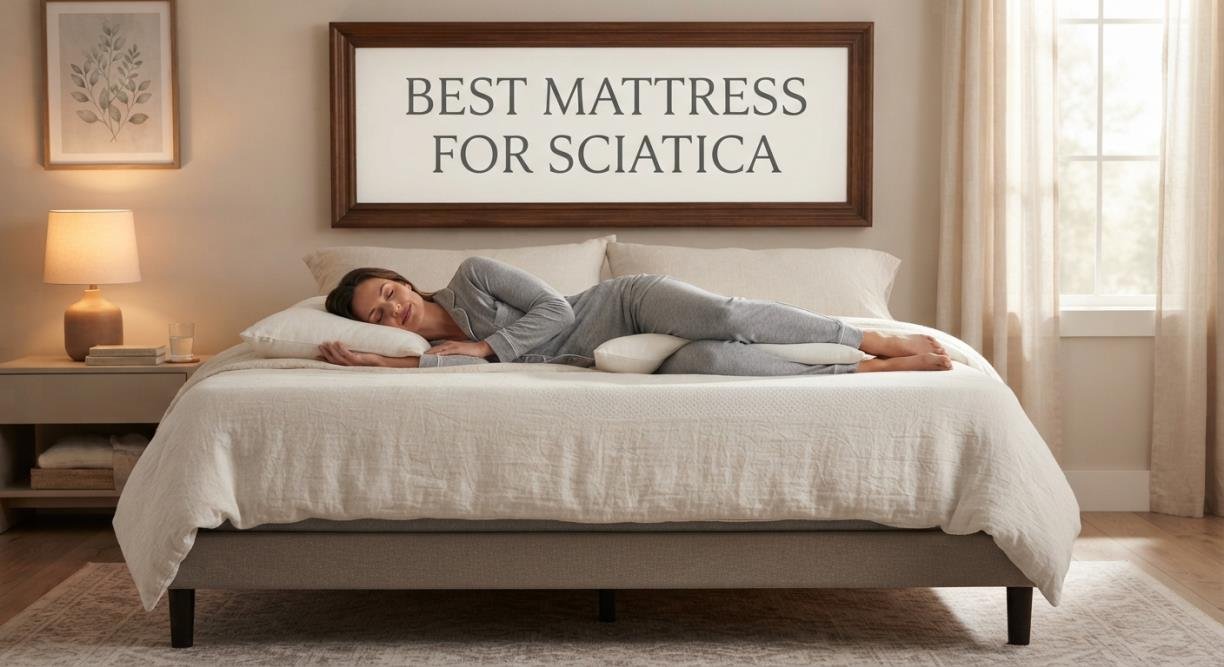
Best Mattress for Sciatica: How to Choose the Right Support
Sciatica can turn a good night’s sleep into hours of tossing, turning, and searching for a comfortable position. The wrong mattress may leave your hips, lower back, or legs feeling even more uncomfortable when you wake up. But replacing your mattress is not simply about choosing something softer or firmer—it is about finding the right balance of support, cushioning, and pressure relief for your body.
Best mattress for sciatica matters. In this guide, we’ll explain what to look for in a mattress, including firmness, materials, sleeping position, spinal support, and pressure relief, so you can make a confident choice.
What Is Sciatica and Why Can Your Mattress Matter?
Sciatica is pain caused by irritation or compression of the sciatic nerve, which runs from the lower back through the buttocks and down the leg. Symptoms can include sharp or burning pain, tingling, numbness, and weakness, often affecting one side of the body. When you’re dealing with sciatica, sleeping can become surprisingly difficult. You may spend hours changing positions, trying to find.
A spot that does not increase pressure around your lower back, hip, or leg. That is where mattress choice becomes relevant. A Mattress cannot fix the underlying cause of sciatica, but the right sleep surface may help you maintain a more comfortable position, distribute pressure, and avoid unnecessary discomfort during the night. The best mattress for sciatica is not necessarily the hardest or most expensive mattress.
It is the one that provides a useful balance between support and cushioning for your body, sleeping position, and personal comfort. Research on mattresses and back pain generally favors medium-firm surfaces rather than extremely firm ones. A randomized controlled trial involving 313 adults with chronic nonspecific low-back pain found better outcomes with medium-firm mattresses than firm mattresses.
More recent research continues to support medium-firm mattresses as a reasonable general starting point for adults experiencing nonspecific low-back pain, although evidence specifically focused on sciatica remains more limited.
Read more: Quikconsole com: Features, Uses & Website Guide for Users
What Is the Best Mattress Firmness for Sciatica?
For many people, medium-firm is a sensible place to start when choosing the best mattress for sciatica. However, mattress firmness is not a universal prescription. Your weight, body shape, sleeping position, and personal comfort all influence how a mattress feels.
Why Medium-Firm Is Often a Sensible Starting Point
A mattress that is too soft may allow your hips and pelvis to sink excessively. That can make it harder to maintain a comfortable spinal position. A mattress that is extremely firm can create excessive pressure around the shoulders, hips, and other contact points, particularly for side sleepers. Medium-firm mattresses attempt to balance these two extremes.
A systematic review of mattress research found that medium-firm mattresses were associated with improved comfort, sleep quality, and spinal alignment compared with other firmness levels. That does not mean every person with sciatica should buy exactly the same mattress. Instead, it gives shoppers a practical starting point when searching for the best mattress for sciatica.
Why Very Firm Is Not Automatically Better
The idea that a very hard mattress is always better for back problems is common, but research does not strongly support it. In the controlled trial mentioned above, participants assigned to medium-firm mattresses generally experienced better outcomes than those using firmer mattresses. If a firm mattress creates pressure around your hips or shoulders, making it difficult to relax, it may not be the right choice simply because it feels supportive.
Why Very Soft Mattresses Can Also Cause Problems
A very plush mattress may feel comfortable initially but provide insufficient support for some sleepers. If your pelvis sinks much farther than the rest of your body, you may feel that your lower back is being pulled into an uncomfortable position. The goal is not to find the softest mattress or the hardest mattress. The goal is to find a surface that supports your body without creating uncomfortable pressure.
Mattress Features That Matter for Sciatica
When comparing options for the best mattress for sciatica, don’t focus only on the firmness label.
Spinal Alignment
Good spinal alignment means your mattress allows your spine to remain in a relatively natural position while you sleep. This does not mean your spine has to remain perfectly straight all night. Rather, the mattress should provide enough support to prevent excessive sinking while still accommodating your body’s natural curves.
Pressure Relief
Pressure relief is especially important for side sleepers. Your shoulders and hips carry more of your weight when you’re sleeping on your side. A mattress with suitable cushioning can help distribute that pressure rather than concentrating it in a small area.
Responsive Support
Support should not mean an uncomfortably hard surface. A supportive mattress should respond to your body and prevent excessive sinking. Materials such as latex, foam, coils, or combinations of these can accomplish this in different ways.
Temperature and Sleep Comfort
Pain is not the only factor affecting sleep. If a mattress traps excessive heat or feels uncomfortable throughout the night, you may wake frequently and struggle to get restorative sleep. Look for breathable construction if you tend to sleep hot.
Which Mattress Types Work Well for Sciatica?
There is no single mattress material proven to be the best mattress for sciatica for every person. Different constructions have different advantages.
| Mattress Type | Potential Benefits | Possible Drawbacks | Good Starting Point For |
| Memory foam | Strong pressure relief and contouring | Can retain heat or feel difficult to move on | Side sleepers needing cushioning |
| Latex | Responsive, supportive and generally breathable | Can feel firmer and may cost more | People wanting support without deep sinking |
| Hybrid | Combines cushioning with coil support | Quality varies considerably | Sleepers wanting balanced support |
| Innerspring | Responsive and often breathable | Some models provide limited pressure relief | People who prefer a traditional feel |
Memory Foam
Memory foam can provide substantial pressure relief because it contours around the body. For someone whose hips and shoulders feel uncomfortable on a firmer surface, this can be useful. The downside is that deeply contouring foam can make movement more difficult for some people. It may also retain more heat depending on the construction.
Latex
Latex has a more responsive feel than traditional memory foam. It can provide cushioning without allowing you to sink as deeply into the mattress. This can be appealing if you want pressure relief but dislike the “stuck” feeling associated with some softer foams.
Hybrid Mattresses
Hybrid mattresses combine multiple materials, usually foam or latex over a coil support system. A well-designed hybrid can offer pressure relief on top with stronger support underneath. For many shoppers, this combination makes hybrids worth considering when choosing the best mattress for sciatica.
Innerspring Mattresses
Traditional innerspring mattresses can offer good airflow and a responsive feel. However, the amount of pressure relief depends heavily on the comfort layers placed above the coils. An inexpensive, very firm innerspring mattress may not be as comfortable as a properly cushioned model.
Choosing a Mattress Based on Your Sleeping Position
Your sleeping position should influence your decision when selecting the best mattress for sciatica.
Side Sleepers
Side sleeping places more pressure on the shoulders and hips. If you sleep on your side, look for enough cushioning to accommodate those areas while still maintaining support through the midsection. A medium-firm mattress with suitable pressure relief may be a useful starting point. A pillow between your knees can also help some side sleepers maintain a more comfortable position.
Back Sleepers
Back sleepers generally need balanced support beneath the lower back and pelvis. A mattress that is too soft may allow the pelvis to sink excessively, while a very hard mattress may create uncomfortable pressure. Medium-firm surfaces are often worth testing for this sleep position.
Stomach Sleepers
Stomach sleeping can be more challenging for people experiencing back discomfort because it can encourage the pelvis and abdomen to sink into the mattress. If you cannot comfortably change positions, choose a mattress that prevents excessive sinking while still providing enough cushioning.
How Body Weight Affects Mattress Choice
Two people can lie on the same mattress and experience completely different levels of firmness. A heavier sleeper may sink farther into a mattress than a lighter sleeper. Conversely, a lighter person may experience a firm mattress as significantly harder. This is why mattress firmness labels should be treated as a guide rather than an absolute measurement.
When shopping for the best mattress for sciatica, consider how deeply your body sinks, whether your hips and shoulders feel supported, and whether you wake with increased discomfort.
Mattress Features to Avoid
Be cautious about mattresses that make dramatic medical promises. A mattress should not be marketed as a guaranteed treatment or cure for sciatica simply because it is labeled “orthopedic.” A literature review noted that claims about “orthopaedic mattresses” having therapeutic properties are not adequately supported by available evidence.
Also be cautious with:
- Extremely soft mattresses that allow excessive sinking
- Extremely firm surfaces that create painful pressure points
- Mattresses that make you feel trapped when changing position
- Poor-quality materials that sag prematurely
- Products with unclear trial or return policies
- Marketing claims promising to cure nerve compression
How to Test a Mattress Before Buying
If possible, use the mattress trial period before deciding whether it is the best mattress for sciatica for your needs. Spend enough time on the mattress to determine whether your body actually tolerates it. The first few minutes in a showroom cannot always predict how you will feel after several nights.
Pay attention to these questions:
- Does your lower back feel supported?
- Are your hips and shoulders comfortable?
- Can you change positions easily?
- Are you waking because of pressure or discomfort?
- Do you feel better or worse after getting out of bed?
- Does the mattress maintain its support when you move toward the edge?
Can a Mattress Cure Sciatica?
A mattress may influence comfort and sleep quality, but it does not remove a herniated disc, spinal narrowing, or another underlying cause of nerve irritation. Sciatica can have several causes, including a slipped or herniated disc, spinal stenosis, spondylolisthesis, or back injury.
That is why mattress shopping should be viewed as one part of managing sleep discomfort rather than a medical treatment. If symptoms persist, become worse, or interfere substantially with normal activities, professional medical advice is appropriate.
When Sciatica Requires Medical Attention
Most cases of sciatica improve over time, but certain symptoms require urgent attention. Seek emergency medical care if sciatica is accompanied by new numbness around the genitals or anus, difficulty starting or controlling urination, loss of bowel control, or severe or worsening weakness or numbness in both legs.
These can indicate a serious spinal problem requiring urgent assessment. Do not assume that changing your mattress will solve symptoms like these. For persistent or worsening symptoms without emergency warning signs, speak with a qualified healthcare professional.
How to Improve Sleep With Sciatica
Your mattress is only one part of the sleep environment. Try changing positions regularly rather than remaining in one uncomfortable posture for hours. Guidance from the NHS also recommends continuing normal activities as much as possible and avoiding prolonged periods of sitting or lying down.
Other practical strategies include:
- Using a pillow between your knees when side sleeping
- Trying a pillow beneath your knees when lying on your back
- Choosing bedding that does not make you overheat
- Getting up and moving gently when prolonged lying becomes uncomfortable
- Following exercises recommended by a healthcare professional
- Keeping a consistent sleep schedule
- Avoiding long periods of inactivity during the day
Final Thoughts
Best mattress for sciatica is less about finding a magical product and more about finding the right balance of support, pressure relief, and comfort for your body. For most shoppers, medium-firm support is a sensible starting point because research on low-back pain generally gives it more support than extremely firm surfaces. From there, consider your sleeping position, body weight, preferred mattress material, temperature preferences, and how easily you can change positions.
Most importantly, remember that a mattress is a comfort tool, not a cure for nerve problems. If your symptoms are persistent or worsening—or if you experience serious neurological or bladder/bowel symptoms—seek appropriate medical care rather than relying on a new mattress.
FAQs about best mattress for sciatica
Q1: What is the best mattress for sciatica?
Ans: For many people, a medium-firm mattress with a good balance of support and pressure relief is a sensible starting point. The best choice still depends on body weight, sleeping position, and personal comfort.
Q2: Is a firm mattress good for sciatica?
Ans: Not necessarily. Research on low-back pain has found medium-firm mattresses can perform better than firmer mattresses. A very firm surface may create uncomfortable pressure for some sleepers.
Q3: Is a medium-firm mattress good for sciatica?
Ans: It can be. Medium-firm mattresses have the strongest general evidence among mattress firmness levels for improving comfort and some low-back-pain outcomes, although this does not mean they treat sciatica itself.
Q4: Is memory foam good for sciatica?
Ans: Memory foam can be useful when pressure relief is a priority, particularly for some side sleepers. However, individual preferences vary, and very soft foam may allow excessive sinking.
Q5: Is a hybrid mattress good for sciatica?
Ans: A hybrid can be a good option because it combines cushioning materials with a supportive coil system. Look for a model that provides pressure relief without excessive sinking.
Q6: What mattress is best for side sleepers with sciatica?
Ans: Side sleepers often benefit from a mattress that cushions the shoulders and hips while supporting the waist and pelvis. A medium-firm model with adequate pressure relief is worth considering.
Q7: Can a bad mattress make sciatica worse?
Ans: An unsuitable mattress may increase discomfort or make it harder to find a comfortable sleeping position. However, it is unlikely to be the underlying cause of true sciatica in most cases.
Q8: Should I replace my mattress if I have sciatica?
Ans: Consider replacing it if it is sagging, excessively soft or firm for your body, uncomfortable, or consistently associated with worse sleep. If your current mattress is comfortable and supportive, replacement may not be necessary.
Q9: Can sleeping position help with sciatica?
Ans: Yes, changing your position can improve comfort for some people. Side sleepers may find a pillow between the knees helpful, while back sleepers may prefer support beneath the knees. There is no single position that works for everyone.
Q10: Can a mattress cure sciatica?
Ans: No. A mattress may improve comfort and sleep quality, but it cannot cure the underlying causes of nerve irritation. Persistent, severe, or worsening symptoms should be evaluated by a healthcare professional.






One Comment