

What Is Forbearance? Meaning, How It Works & What to Know
If you are struggling to make loan payments because of a temporary financial problem, you may have heard the term what is forbearance. In simple terms, forbearance is an arrangement that may allow a borrower to temporarily reduce, pause, or otherwise adjust required loan payments because of financial hardship.
Forbearance does not normally mean that the debt has been canceled. Instead, it gives the borrower temporary breathing room while they deal with a financial challenge. For example, someone might experience a temporary loss of income, unexpected expenses, a natural disaster, or another financial setback. Depending on the loan and lender, forbearance may provide temporary payment relief.
The exact terms can vary significantly. Some agreements reduce payments, while others allow payments to be paused for a specified period. Interest may continue to accumulate during the forbearance period, so borrowers should carefully review the agreement before accepting it.
Read More: How to Use Home Equity to Build Wealth: Smart Strategies
How Does Forbearance Work?
To understand what is forbearance, it helps to see how the process generally works.
A borrower who expects difficulty making payments contacts the lender or loan servicer. The borrower explains the financial hardship and asks whether a forbearance option is available. If the request is approved, the lender and borrower agree on specific terms. These terms may include:
- The length of the forbearance period
- Whether payments are paused or reduced
- Whether interest continues to accrue
- How missed or reduced payments will be repaid
- Whether fees apply
- What happens when the agreement ends
Forbearance is usually temporary. Once the agreed period expires, the borrower generally needs to resume payments under the applicable repayment arrangement.
Requesting Forbearance: The first step is usually contacting the lender or servicer before missing payments, when possible. Explain your financial situation honestly and ask what hardship programs are available. The lender may request information about income, expenses, employment, or the reason for the hardship.
Agreeing on New Payment Terms: If approved, do not rely only on a phone conversation. Ask for the terms in writing. Pay particular attention to the payment amount, duration, interest treatment, fees, and repayment requirements.
Returning to Regular Payments: When the forbearance period ends, payments generally become due again. The amount or repayment structure may differ depending on the agreement. This is why planning for the end of forbearance is just as important as obtaining the temporary relief.
What Is Forbearance on a Loan?
When people ask what is forbearance in relation to personal loans, student loans, or other debt, they are usually asking about temporary relief from required payments. Loan forbearance may be available under certain circumstances, but eligibility depends on the type of loan, lender, contract, and applicable rules.
For example, a lender might agree to temporarily reduce or suspend payments for a borrower experiencing financial hardship. However, the borrower may still owe the unpaid amounts later. Before accepting loan forbearance, ask how the postponed amount will be handled. It might be added to the balance, repaid through a later payment arrangement, or addressed through another method.
What Is Mortgage Forbearance?
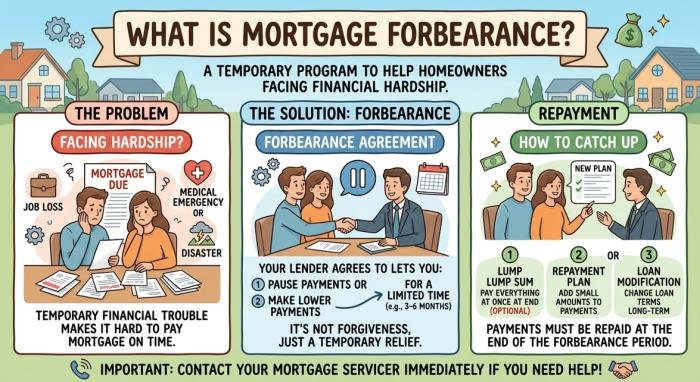
Mortgage forbearance is a temporary arrangement involving mortgage payments. If a homeowner experiences a qualifying financial hardship, the mortgage servicer may offer an arrangement that temporarily reduces or suspends payments. When researching what is forbearance, it is important to remember that mortgage forbearance does not generally erase the payments that were not made.
The homeowner should ask the mortgage servicer what happens after the forbearance period. Depending on the program and agreement, repayment could involve a lump-sum payment, a repayment plan, a loan modification, or another permitted option.
Mortgage rules and programs can vary by country, loan type, and circumstances. Borrowers should therefore rely on the specific written terms provided by their mortgage servicer.
Does Interest Accrue During Forbearance?
One of the most important questions when considering what is forbearance is whether interest continues to accumulate. In many situations, interest can continue accruing even when regular payments are temporarily reduced or suspended. This means that forbearance may provide short-term payment relief without reducing the underlying cost of borrowing.
| Factor | What to Check |
| Payment amount | Is the payment paused, reduced, or unchanged? |
| Duration | How long does the forbearance last? |
| Interest | Does interest continue to accrue? |
| Missed payments | How will they be handled later? |
| Fees | Are additional fees charged? |
| Credit reporting | How will the account be reported? |
| Repayment | What happens when forbearance ends? |
Benefits and Potential Drawbacks of Forbearance
Understanding what is forbearance also means looking at both sides of the arrangement.
Potential Benefits: The biggest potential advantage is temporary payment relief.For someone experiencing a short-term financial setback, forbearance may provide additional time to stabilize income, manage unexpected expenses, or recover from a temporary emergency. It may also help a borrower avoid immediately falling further behind when a lender offers an appropriate hardship arrangement.
Potential Drawbacks: Forbearance does not necessarily make debt cheaper.If interest continues to accrue, the amount owed may increase. The borrower may also face larger payments or additional repayment obligations after the forbearance period. Another concern is that some borrowers may treat forbearance as a permanent solution when it is generally designed to address temporary hardship.Before agreeing, calculate whether you will realistically be able to afford the payments once the temporary period ends.
Forbearance vs. Deferment
People often use what is forbearance and deferment interchangeably, but they can describe different arrangements. Both can provide temporary payment relief, but the treatment of interest and eligibility can differ depending on the type of debt and applicable program.
In some deferment arrangements, certain types of interest may not accrue during the deferment period. With forbearance, interest commonly continues to accrue, although the exact rules depend on the loan. The safest approach is to compare the actual terms rather than relying on the name of the program. Ask your lender or servicer:
- Will interest continue?
- Will the balance increase?
- How long will the relief last?
- How will postponed payments be repaid?
- How will the account be reported to credit bureaus?
Does Forbearance Affect Your Credit?
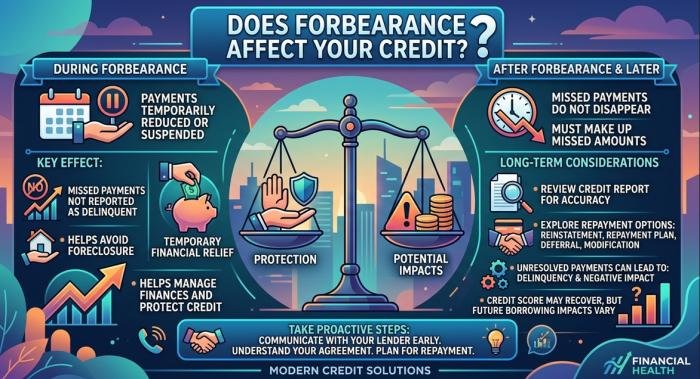
Another common question related to what is forbearance is whether it affects a borrower’s credit. The answer depends on the loan type, lender or servicer, applicable reporting rules, and how the account is handled.
An approved forbearance arrangement is different from simply missing payments without communicating with the lender. Therefore, borrowers should ask specifically how the account will be reported during the agreed period.
Do not assume that entering forbearance automatically means your credit score will increase, decrease, or remain unchanged. Instead, request clear information about credit reporting and keep copies of the agreement and related communications.
What Happens After Forbearance Ends?
Knowing what is forbearance is only part of the decision. You also need to understand what happens afterward. Depending on the agreement, you may have to:
- Resume normal monthly payments
- Repay postponed amounts over time
- Make a larger payment
- Follow a modified repayment plan
- Complete another approved arrangement
The post-forbearance terms should be discussed before the temporary relief begins whenever possible. If your financial hardship is likely to continue, tell the lender before the forbearance ends. Waiting until another payment is missed may limit the options available to you.
When Should You Consider Forbearance?
Forbearance may be relevant when your financial difficulty is temporary and you expect your ability to make payments to improve. For example, a temporary reduction in income or an unexpected expense might create a short-term cash-flow problem.
However, if you cannot afford the loan under normal circumstances and do not expect your situation to improve, temporary forbearance may not solve the underlying problem. In that situation, you may want to ask the lender about other hardship programs, repayment options, refinancing where appropriate, or loan modification options. The right choice depends on your financial circumstances and the terms available for your particular debt.
How to Request Forbearance
If you think you may need payment relief, contact your lender or servicer as soon as possible. Start by asking whether a hardship or forbearance program is available. Explain why you are having difficulty making payments and provide any information the lender requests. Before accepting the agreement, ask:
- How long will the forbearance last?
- What will my payment be during this period?
- Will interest continue to accrue?
- Will fees be charged?
- What happens to the postponed payments?
- What will my payment be afterward?
- How will the account be reported?
- Can I receive the agreement in writing?
Questions to Ask Before Accepting Forbearance
If you are still researching what is forbearance, focus on the total financial effect rather than just the temporary payment reduction. A lower or paused payment may sound helpful, but you need to know what happens to the money you do not pay now.
For example, if interest accumulates or postponed payments must be repaid later, your future financial obligation could be different from your current one. A written agreement makes it easier to understand your responsibilities and compare the arrangement with other options.
Final Thoughts
The simplest answer to what is forbearance is that it is a temporary form of payment relief that may help borrowers manage a period of financial hardship. It can provide valuable breathing room, but it does not usually erase the debt. Interest may continue to accrue, and postponed payments may need to be repaid later.
Before accepting any forbearance arrangement, review the terms carefully, ask how interest and credit reporting will be handled, and find out exactly what happens when the temporary period ends. If your financial difficulty is temporary, forbearance may be one option worth discussing with your lender or servicer. If the problem is likely to last longer, ask about other repayment or hardship solutions that may better match your circumstances.
FAQs
Q1: What is forbearance?
Ans: Forbearance is a temporary arrangement that may allow a borrower to reduce or pause loan payments because of financial hardship. The debt generally remains owed.
Q2: What is forbearance on a mortgage?
Ans: Mortgage forbearance is a temporary agreement that may reduce or suspend mortgage payments. The postponed amount usually still needs to be addressed after the forbearance period.
Q3: Does interest accrue during forbearance?
Ans: It often can. The exact treatment depends on the loan and agreement, so borrowers should confirm whether interest continues to accumulate.
Q4: Is forbearance the same as deferment?
Ans: No. They can both provide temporary payment relief, but their eligibility requirements and interest treatment may differ depending on the type of loan and program.
Q5: Does forbearance hurt your credit?
Ans: It depends on the loan, lender or servicer, reporting rules, and circumstances. Ask how the account will be reported before entering an agreement.
Q6: Can forbearance eliminate my debt?
Ans: Generally, no. Forbearance usually postpones or reduces payments temporarily rather than canceling the debt.
Q7: What happens when forbearance ends?
Ans: You generally resume payments and may need to repay postponed amounts according to the agreement. The exact repayment method varies.
Q8: How long does forbearance last?
Ans: The duration depends on the lender, loan type, applicable program, and individual circumstances. Always check the written agreement for the exact period.