
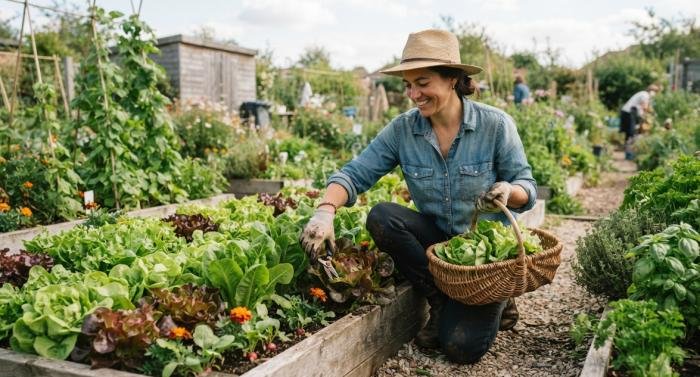
How to Grow Lettuce: Simple Tips for Healthy, Fresh and Crisp Greens
Growing fresh lettuce at home is a simple and enjoyable way to add healthy, delicious greens to your daily meals. Whether you have a backyard garden, a balcony, or just a few containers, you can grow crisp lettuce with basic gardening supplies and proper care. If you are wondering how to grow lettuce successfully, the process starts with choosing the right seeds, preparing fertile soil, and providing suitable sunlight and water. With a few practical techniques, even beginners can enjoy fresh, homegrown lettuce.
Lettuce Growing Requirements at a Glance
Before planting lettuce, it helps to understand the basic conditions that support healthy growth. The following table summarizes the most important growing requirements.
| Growing Factor | Recommended Conditions |
| Plant type | Cool-season leafy vegetable |
| Sunlight | 4–6 hours of sunlight; provide shade in hot weather |
| Soil type | Loose, fertile, and well-draining soil |
| Soil pH | Approximately 6.0–7.0 |
| Watering | Regular watering to maintain consistent moisture |
| Seed depth | About 1/8–1/4 inch |
| Plant spacing | 6–12 inches, depending on variety |
| Germination time | Usually 7–14 days |
| Harvest time | Approximately 30–70 days, depending on variety |
| Temperature | Generally prefers cool conditions around 15–20°C |
| Fertilizer | Balanced fertilizer or mature compost |
| Growing location | Garden beds, pots, raised beds, or containers |
Choose the Right Lettuce Variety
The first step in growing healthy lettuce is selecting a variety that suits your climate, available space, and gardening preferences. Different lettuce varieties have different growing habits, leaf textures, colors, and harvesting times. Some produce loose leaves, while others form compact heads.
Choosing the right variety can make a significant difference in your gardening results. If you are a beginner, start with varieties that grow quickly and are relatively easy to maintain. Here are four popular types of lettuce you can consider.
Read More: Thehometrotters Homerepairs: Smart Tips for Home Repair and Maintenance
Leaf Lettuce
Leaf lettuce is one of the easiest varieties to grow at home. Instead of forming a tight head, it produces loose clusters of tender leaves. You can harvest the outer leaves while allowing the center to continue growing. Green leaf and red leaf lettuce are popular choices. They grow relatively quickly and work well in garden beds and containers. Leaf lettuce is especially suitable for beginners because it offers repeated harvesting opportunities. With proper care, one plant can provide fresh leaves over several weeks.
Romaine Lettuce
Romaine lettuce is recognized by its long, upright leaves and crunchy central ribs. It has a slightly stronger flavor than many loose-leaf varieties and is commonly used in salads and sandwiches.
This variety generally needs more growing space than small leaf lettuce plants. It also benefits from consistent watering and fertile soil. Romaine lettuce is a good option if you prefer crisp leaves with a firm texture.
Butterhead Lettuce
Butterhead lettuce produces soft, rounded heads with tender leaves. Its delicate texture and mild flavor make it a popular choice for fresh salads.
This variety usually grows best in cooler conditions. It needs consistent moisture because dry soil can make the leaves less tender. Butterhead lettuce is a suitable option for gardeners who enjoy soft, fresh greens.
Crisphead Lettuce
Crisphead lettuce produces compact, tightly packed heads with crunchy leaves. Iceberg lettuce is one of the best-known examples. Compared with loose-leaf varieties, crisphead lettuce can take longer to mature and may require more careful growing conditions. It generally performs better when temperatures remain cool. If you are new to gardening, you may want to start with leaf lettuce before trying crisphead varieties.
Select the Best Location for Growing Lettuce
Choosing the right location is another important step in producing healthy lettuce. Lettuce needs sufficient light for photosynthesis, but it does not perform well under extreme heat. A location that receives approximately four to six hours of sunlight is a good starting point. In cooler climates, lettuce can tolerate more direct sunlight. However, in warmer regions, afternoon shade can help protect the plants from excessive heat. If you are growing lettuce in a backyard garden, choose a location that receives morning sunlight and some protection during the hottest part of the day.
For balcony gardening, place your containers where they receive gentle sunlight and have good air circulation. Avoid locations where strong afternoon sunlight heats the containers excessively. You should also select a growing area with convenient access to water. Lettuce needs regular watering, so having a nearby water source makes daily maintenance easier. Good air circulation is equally important. Avoid overcrowding plants because poor airflow can encourage fungal diseases and other growing problems.
Prepare the Soil Before Planting
Healthy soil provides the nutrients, moisture, and support lettuce needs to develop strong roots and tender leaves. Lettuce grows best in loose, fertile, well-draining soil that contains plenty of organic matter. Heavy soil that remains waterlogged can cause root problems and slow plant development. Before planting, remove weeds, stones, and other unwanted materials from your garden bed. Loosen the soil to a depth of approximately 8–12 inches to improve drainage and root development.
Adding mature compost is an excellent way to improve soil quality. Compost provides organic matter, supports beneficial soil organisms, and helps maintain moisture. If your garden soil contains too much clay, mix in suitable organic matter to improve its structure. For sandy soil, compost can help improve water retention.
The ideal soil pH for lettuce is generally between 6.0 and 7.0. If you are unsure about your soil condition, consider using a soil testing kit before planting. For container Gardening, use a high-quality potting mix rather than ordinary garden soil. Potting mixes are usually lighter and provide better drainage for plants growing in pots. Avoid using fresh manure directly around lettuce roots. It can contain excessive nutrients and may introduce harmful microorganisms. Well-composted organic materials are a safer option.
Plant Lettuce Seeds Correctly
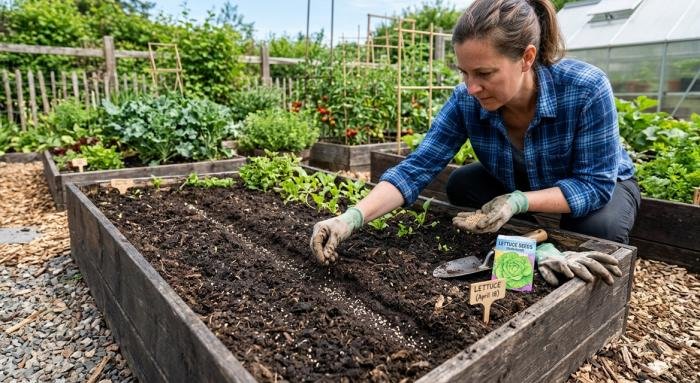
Once your soil is ready, it is time to plant lettuce seeds. You can start seeds directly in the garden or grow them in seed trays before transplanting. Lettuce seeds are small, so they should not be buried too deeply. Sow them approximately 1/8 to 1/4 inch below the soil surface. Cover them lightly with fine soil or a thin layer of growing medium. If you are planting directly in a garden bed, place the seeds in shallow rows. Leave enough room between rows to make watering, weeding, and harvesting easier. For seed trays, fill each cell with a suitable seed-starting mix. Place one or two seeds in each cell and cover them lightly. If both seeds germinate, remove the weaker seedling when necessary.
Keep the growing medium consistently moist during germination. Avoid pouring large amounts of water because this may wash away the tiny seeds. Lettuce seeds generally germinate within 7–14 days under suitable conditions. However, germination can take longer if temperatures are too high or the growing medium becomes too dry. After the seedlings develop several true leaves, they can be transplanted into their permanent growing location.
Maintain Proper Spacing Between Plants
Proper spacing allows lettuce plants to receive enough sunlight, air circulation, water, and nutrients. When plants grow too close together, they compete for resources and may produce smaller leaves. The correct spacing depends on the lettuce variety you are growing. Loose-leaf varieties generally need less room than larger head-forming varieties. As a general guide, leave approximately 6–12 inches between plants, adjusting the distance according to the variety and the size of the mature plants.
If you are growing lettuce in containers, choose pots that provide sufficient room for root development. A container around 6–8 inches deep is suitable for many smaller lettuce varieties, although larger plants benefit from deeper containers. Avoid placing too many plants in one pot. Overcrowding can reduce airflow and increase the risk of disease.
Water Lettuce Plants Regularly
Watering is one of the most important parts of growing healthy lettuce. Lettuce has relatively shallow roots, which means it can quickly suffer when the soil becomes too dry. Consistent moisture helps lettuce produce tender, crisp leaves. When plants experience repeated drying, they may grow slowly, develop bitter leaves, or bolt prematurely. Water your lettuce whenever the upper layer of soil begins to dry. The frequency depends on the weather, soil type, container size, and growing location. During hot weather, container-grown lettuce may require more frequent watering than plants growing in garden beds.
The best time to water is generally early in the morning. Morning watering allows plants to absorb moisture before the temperature rises.
Provide the Right Amount of Sunlight
Sunlight supports healthy leaf development and helps lettuce produce the energy required for growth. However, lettuce is a cool-season vegetable, so excessive sunlight combined with high temperatures can create problems. Most lettuce varieties grow well with approximately four to six hours of sunlight, particularly in warmer climates.
If temperatures become high, consider using shade cloth or placing containers in a partially shaded location. Afternoon shade is especially helpful because it reduces heat stress. Morning sunlight is generally beneficial because it provides light without exposing plants to the strongest afternoon heat.
Fertilize Lettuce for Healthy Leaf Growth
Lettuce grows quickly and produces a large amount of leafy growth, so it needs a steady supply of nutrients. Nitrogen is particularly important because it supports the development of green leaves. However, lettuce also requires phosphorus, potassium, and other nutrients for balanced growth. Before planting, mix mature compost into the soil to improve fertility. This can provide a good starting point for healthy plant development.
If your soil lacks nutrients, use a balanced vegetable fertilizer according to the manufacturer’s instructions. A fertilizer with a suitable nitrogen content can support leaf production. Avoid applying too much fertilizer. Excessive nitrogen can encourage soft growth and may affect plant quality.
For container-grown lettuce, nutrients can become depleted more quickly because the available soil volume is limited. Follow the fertilizer instructions and monitor plant growth.
Control Weeds Around Lettuce Plants
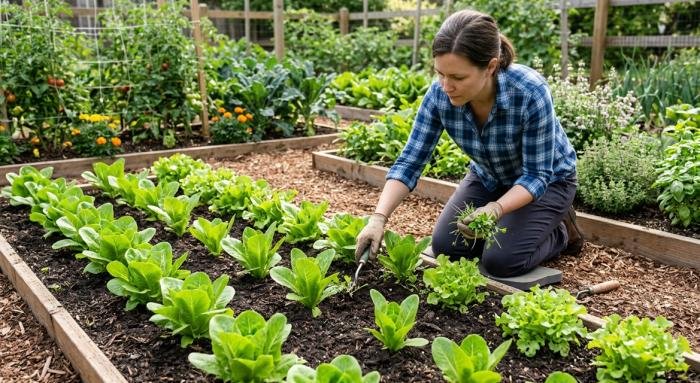
Weeds compete with lettuce for water, sunlight, nutrients, and growing space. If they are allowed to spread, they can affect plant development and reduce your harvest. Regularly inspect your garden bed and remove weeds while they are still small. Hand-pulling is often the easiest method because lettuce has relatively shallow roots. Work carefully around the plants to avoid disturbing their root systems.
Adding a thin layer of clean organic mulch can help suppress weed growth and maintain soil moisture. Suitable mulch materials include clean straw or other appropriate organic materials. Keep mulch slightly away from the base of the plants to prevent excessive moisture from collecting around the stems.
For container gardening, remove unwanted plants as soon as they appear. This helps lettuce receive the available nutrients and water.
Protect Lettuce from Common Pests
Although lettuce is relatively easy to grow, several garden pests can damage its leaves and reduce plant quality. Regularly checking your plants helps you identify pest problems before they become severe.
Aphids
Aphids are small insects that usually gather on the undersides of leaves and around new growth. They feed on plant sap and can cause curled or distorted leaves. You can remove small aphid populations by gently washing the leaves with water. In more serious cases, use an appropriate insecticidal soap according to its label.
Slugs and Snails
Slugs and snails feed on tender lettuce leaves and often leave irregular holes behind. They are especially active in damp conditions and during the evening. Remove visible slugs and snails by hand when practical. Keep the garden area free of excessive debris and avoid creating unnecessarily damp hiding places.
Caterpillars
Some caterpillars feed on lettuce leaves and create noticeable holes. Inspect the leaves regularly, particularly their undersides. Remove caterpillars by hand when possible. Row covers can also help protect young plants from certain insects.
Cutworms
Cutworms can damage young lettuce seedlings by cutting through their stems near the soil surface. Removing plant debris and inspecting the soil around affected seedlings can help identify these pests. Protecting young plants with suitable collars may also reduce cutworm damage.
Prevent Common Lettuce Diseases
Lettuce can experience several diseases, especially when plants are overcrowded or exposed to excessive moisture. Good growing practices can reduce the risk of many common problems.
Downy Mildew
Downy mildew can cause pale or yellow patches on the upper leaf surfaces and a fuzzy growth underneath when conditions are suitable. Improve airflow by providing enough spacing between plants. Avoid unnecessary overhead watering and remove severely affected leaves.
Powdery Mildew
Powdery mildew appears as a white, powder-like coating on leaf surfaces. Although it is more common in certain growing conditions than others, good airflow and proper plant spacing can help reduce the risk.
Root Rot
Root rot is often associated with poorly drained soil and excessive watering. Affected plants may wilt, develop yellow leaves, or show signs of weak root growth. Improve drainage, avoid overwatering, and use suitable containers with drainage holes.
Bottom Rot
Bottom rot can affect lettuce heads, particularly when plants are grown in crowded or overly moist conditions. Maintaining proper spacing, removing infected plant material, and avoiding excessive soil moisture can help prevent problems. Healthy plants are generally better able to tolerate environmental stress. Regular inspection and proper garden hygiene are important parts of disease prevention.
Understand Bolting and How to Prevent It
Bolting is one of the most common problems gardeners face when growing lettuce. It happens when the plant produces a flower stalk and shifts its energy toward flowering and seed production. This process often occurs when temperatures become too high or the plant experiences stress.When lettuce bolts, its leaves may become bitter, and their texture may become less appealing.
Although bolting is a natural part of the plant’s life cycle, you can reduce its chances by following a few simple practices.
First, select varieties that are suitable for your local climate. Heat-tolerant lettuce varieties are particularly useful in warmer regions.
Second, provide partial shade during hot afternoons. This helps keep the plants cooler.
Third, maintain consistent soil moisture. Avoid allowing the soil to become completely dry between watering sessions.
Finally, plant lettuce during the cooler part of the growing season. Proper planting time can make a significant difference in the quality of your harvest.
Grow Lettuce in Containers at Home
You do not need a large garden to enjoy fresh lettuce. Container gardening is an excellent option for people with limited outdoor space. You can grow lettuce in pots, window boxes, raised containers, and suitable recycled growing containers. Choose a container with drainage holes at the bottom. Most small lettuce varieties can grow successfully in pots that are at least 6–8 inches deep. Fill the container with a high-quality potting mix that retains moisture while allowing excess water to drain.
Plant your seeds at the recommended depth and provide enough space between seedlings. Place the container in an area with suitable sunlight. If the weather is hot, move it to a location with afternoon shade.
Container-grown lettuce may dry out more quickly than garden-grown plants, so check soil moisture regularly. Avoid allowing water to collect in the tray beneath the pot. Standing water can create conditions that encourage root problems. One advantage of container gardening is that you can move your lettuce plants when sunlight and temperature conditions change.
Plant Lettuce at the Right Time
Planting time has a major influence on lettuce growth and leaf quality. Lettuce generally performs best during cooler weather. In many regions, it is grown during spring and autumn, when temperatures are more comfortable for leafy vegetables. In tropical and subtropical areas, including warmer parts of Bangladesh, the cooler months are generally more suitable for growing lettuce outdoors.
You can start planting when daytime temperatures are moderate and nighttime conditions are relatively cool. During warmer months, choose heat-tolerant varieties and grow them in partially shaded locations. For a continuous supply of fresh lettuce, practice succession planting. This means sowing a small number of seeds every two to three weeks instead of planting all your seeds at once.
Harvest Lettuce at the Right Time
Harvesting is one of the most enjoyable parts of growing lettuce at home. The exact harvesting time depends on the variety, weather, and growing conditions. Many leaf lettuce varieties can be harvested as baby greens within approximately 25–35 days, while mature plants may take around 30–70 days. You do not always need to wait until the plant reaches full maturity.
For loose-leaf lettuce, you can begin harvesting the outer leaves when they are large enough to use. Leave the central growing point undamaged so the plant can continue producing new leaves. For head-forming varieties, harvest when the heads reach their expected size and feel appropriately firm.
Use clean scissors or a sharp gardening knife to avoid damaging the plants. Harvest lettuce during the cooler part of the day, preferably in the morning. The leaves are often more hydrated and crisp at this time.
Store Freshly Harvested Lettuce Properly
After harvesting, proper storage helps maintain the freshness and crisp texture of your lettuce. Start by removing damaged, yellow, or wilted leaves. Gently rinse the remaining leaves under clean, cool running water. Remove excess moisture using a salad spinner or clean kitchen towel. Excess water can encourage spoilage during storage. Place the dry leaves in a clean container or breathable storage bag lined with a paper towel. Store the container in the refrigerator, preferably in the vegetable crisper drawer.
Avoid placing lettuce near fruits that produce significant amounts of ethylene gas, such as apples and ripe bananas, because this gas can accelerate deterioration in some leafy vegetables. Do not freeze fresh lettuce if you plan to use it in salads. Freezing damages its delicate structure and makes the leaves soft after thawing. For the best taste and texture, use freshly harvested lettuce as soon as possible.
Tips for Growing Healthy and Crisp Lettuce
If you want your lettuce to produce fresh, tender, and crisp leaves, a few additional gardening practices can make a noticeable difference.
First, select fresh, high-quality seeds from a reliable supplier. Good seeds provide a stronger starting point for successful germination.
Second, maintain consistent soil moisture. Lettuce needs regular water to produce tender leaves, particularly during warm weather.
Third, use compost to improve soil fertility. Organic matter helps maintain a healthy growing environment.
Fourth, provide enough sunlight without exposing the plants to excessive heat. In warmer climates, partial shade can improve plant performance.
Fifth, remove damaged or diseased leaves regularly. This helps maintain plant health and makes it easier to monitor possible problems.
Sixth, harvest outer leaves gradually if you are growing loose-leaf lettuce. This allows the center of the plant to continue producing new growth.
Finally, practice succession planting to maintain a regular supply of fresh greens.
Conclusion
Growing lettuce at home is a simple and rewarding gardening activity that allows you to enjoy fresh, healthy, and crisp greens whenever you need them. Whether you choose leaf lettuce, romaine, butterhead, or crisphead varieties, successful growth starts with suitable seeds, fertile soil, proper spacing, and consistent watering. If you want to know how to grow lettuce successfully, remember that temperature management and regular plant care are particularly important. Lettuce prefers cooler conditions, so choosing the right planting season and providing afternoon shade in warmer climates can make a big difference. You can grow lettuce in garden beds, raised beds, pots, or balcony containers without needing a large outdoor space. Monitor your plants regularly, protect them from common pests, and harvest the leaves at the right time to maintain their freshness and quality.
Start with a small number of seeds, follow these practical gardening tips, and gradually improve your growing methods. With patience and proper care, you can enjoy a continuous supply of fresh, homegrown lettuce for salads, sandwiches, and many other delicious meals.
FAQs
Q1. How long does lettuce take to grow?
Ans: Lettuce usually takes around 30–70 days to reach maturity, depending on the variety and growing conditions. Some loose-leaf varieties can provide baby greens within 25–35 days. Proper watering, suitable temperatures, and fertile soil can support faster and healthier growth.
Q2. Can I grow lettuce at home without a garden?
Ans: Yes, you can grow lettuce at home without a traditional garden. Containers, pots, window boxes, and balcony planters are suitable options. Choose a container with drainage holes, use quality potting mix, and provide sufficient sunlight and regular watering.
Q3. How often should I water lettuce plants?
Ans: Water lettuce whenever the upper layer of soil begins to dry. The frequency depends on temperature, soil conditions, and container size. Keep the soil consistently moist but avoid waterlogging because excessive moisture can damage the roots.
Q4. Does lettuce need full sunlight?
Ans: Lettuce does not always need full sunlight. Around four to six hours of sunlight is a good starting point, especially in warmer climates. In hot weather, partial shade during the afternoon can help prevent heat stress and premature bolting.
Q5. Why are my lettuce leaves turning yellow?
Ans: Yellow lettuce leaves can result from overwatering, underwatering, nutrient deficiencies, poor drainage, or disease. Check the soil moisture and growing conditions before applying fertilizer. Remove severely damaged leaves and make necessary adjustments to plant care.
Q6. Can lettuce grow in hot weather?
Ans: Yes, some lettuce varieties can tolerate warmer conditions better than others. Choose heat-tolerant varieties, provide afternoon shade, maintain consistent soil moisture, and plant during cooler periods. These practices can reduce heat stress and premature bolting.